Loading...
South Texas brush country and caliche soil demand a fence built the right way. We know this terrain and give you a written quote before we drive a single post.
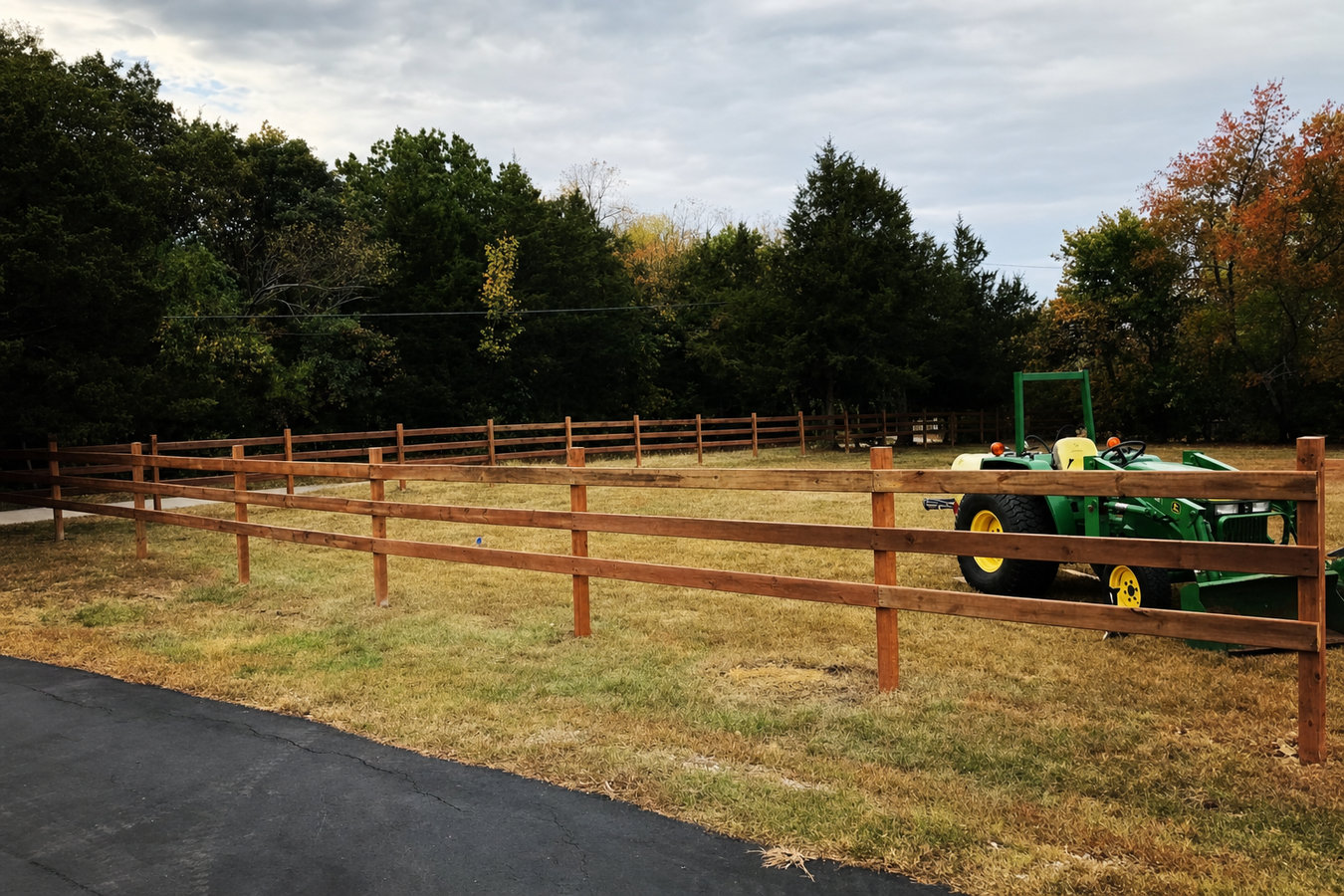
Farm and ranch fencing in Eagle Pass covers barbed wire, high-tensile wire, pipe corrals, and agricultural gates used to manage livestock, mark property lines, and secure large acreage - most straightforward rural jobs are completed in one to three days on-site, with larger properties taking longer depending on terrain.
Maverick County has a long history of ranching and agricultural land use, which means local contractors here understand the specific demands of this terrain - the caliche rock, the mesquite brush, and the wide temperature swings between winter and summer. If your property also includes residential areas that need a yard enclosure or gate, our chain link fence installation service handles that side of the project separately with the same crew.
If posts are tilting or lifting out of the soil when you walk your fence line, the structure is losing integrity. In Eagle Pass, this often happens when caliche layers shift or when posts were not set deep enough to begin with. A leaning post puts stress on the wire around it, and the problem spreads quickly.
Sagging wire is one of the clearest signs a fence needs work. In the South Texas heat, wire that was not tensioned properly at installation loses its tightness faster. If you can push the wire more than a few inches with your hand, it is not doing its job - and animals will find that spot before you do.
If animals are getting out or getting in where they should not be, there is a breach somewhere. This is the most urgent sign, because a loose animal near a road or a neighbor's property creates safety and liability problems immediately. Walk the full fence line after any escape and look for gaps, broken wire, or damaged panels.
Mesquite and prickly pear grow fast and hard into fence lines in Eagle Pass brush country. When woody brush pushes against wire or panels, it loosens posts and tears wire over time. If you can see vegetation tangled into your fence, it is time to clear it and check what damage has already been done underneath.
We build barbed wire fences with properly braced corner posts, high-tensile wire for large perimeter runs, and steel pipe corrals for high-traffic areas like water troughs and working pens. We also install agricultural gates - single and double-swing with quality hardware that holds up to daily use by people and animals. For landowners who need a smaller yard enclosure alongside a larger pasture fence, our pet and dog fencing options are often combined with ranch projects in a single visit.
Every project starts with a property walkthrough before we price anything. We check soil conditions, note where caliche will require specialized equipment, count corners and gates, and look at how much brush clearing is needed. Our written quote covers all of it - materials, labor, clearing, and gates - so there are no surprises when the job is done. USDA cost-share programs through the USDA Natural Resources Conservation Service may offset project costs for qualifying landowners in Maverick County - ask us about timing your project to align with the application process.
Best for cattle operations and large perimeter runs where cost efficiency and proven durability matter most.
Suits landowners with long fence runs who want a low-maintenance option that handles post-spacing variations well.
Designed for working pens, water troughs, and loading areas where livestock pressure is heaviest and wire would fail quickly.
Single and double-swing gates with heavy-duty hardware, properly braced and leveled so they swing freely for years.
The land around Eagle Pass is classic South Texas brush country - dense mesquite, prickly pear, and thorny shrubs that grow back into fence lines quickly, combined with caliche soil that can feel like concrete when you try to drive a post. Contractors who have not worked in this terrain often underestimate both the clearing time and the equipment needed for proper post depth. We use a hydraulic post driver and rock auger when the soil calls for it, and we include brush clearing as part of the project scope rather than pricing it as a surprise add-on after work starts. Eagle Pass also sits directly on the Rio Grande border, and some landowners near the river have fencing needs that include perimeter security and wildlife exclusion alongside livestock management. We are familiar with those considerations and can advise on fence types that address them without running into land-use restrictions.
We serve ranches and agricultural properties throughout the region, including in Brackettville and Cotulla. If your property crosses county lines or you are not sure what jurisdiction your fence falls under, we can help you sort that out before work begins.
We ask a few basic questions - how much fence you need, what animals you are keeping, and what the terrain looks like. This helps us show up to the site visit prepared rather than starting from scratch. We respond within 1 business day.
We walk your fence line before pricing anything. We check soil conditions, terrain changes, gate count, and brush clearing needs. Your written quote covers materials, labor, clearing, and gates - no separate surprise line items.
Move animals off the work area and share your survey or property corners with us if you have them - this prevents boundary mistakes that are expensive to fix. We also confirm whether any buried utilities need to be marked before post-setting begins.
Post-setting comes first - caliche means this phase moves more slowly than softer-ground jobs. Wire or panels go up after posts are set, then gates last. We walk the completed fence with you before leaving and note anything to watch in the first few months.
We respond within 1 business day. There is no obligation after the estimate. We walk your property before pricing - so the number you get is based on your actual land, not a guess over the phone.
(830) 386-1883Most of the land around Eagle Pass requires a hydraulic post driver or rock auger to set posts at the right depth. We bring that equipment to every rural project - it is not an extra charge or an afterthought. Posts set to proper depth in caliche stay straight for years.
We ask about your survey or property corners before we start, not after. A fence built even a few feet over your actual boundary can create a legal dispute that outlasts the fence itself. We build to your line, and we confirm it before driving a single post.
Dense mesquite and prickly pear are part of fence work in South Texas brush country. We include clearing in our project scope and price it in the written quote upfront - so the number you agree to is the number on the final invoice.
Maverick County has a long ranching history, and we have worked on properties throughout this area. We know the soil layers, the terrain changes, and the seasonal timing that gets your project done right without being rushed in summer heat. Texas A&M AgriLife Extension backs best practices for this region - see their guidance at agrilifeextension.tamu.edu.
We combine hands-on knowledge of Maverick County terrain with written quotes that cover every cost upfront - no surprises after the work starts. For research-backed fencing guidance specific to South Texas ranching conditions, the Texas A&M AgriLife Extension publishes detailed guidance on livestock fencing, including corner bracing and wire tensioning standards for this region.
Yard enclosures designed specifically for dogs and small animals, with the right height and gap spacing for secure containment.
Learn MoreGalvanized chain link for residential and light commercial properties - a practical perimeter fence that holds up in South Texas heat.
Learn MoreFall and winter slots fill fast - reach out now to lock in your project before the best scheduling windows are gone and summer heat makes the work harder for everyone.